United States History · Chapter 13
13. Antebellum Idealism and Reform Impulses, 1820–1860
The antebellum period saw a surge in reform movements driven by evangelical Protestantism, including abolitionism, women's rights, and temperance. Key figures like William Lloyd Garrison and Frederick Douglass emerged in the abolitionist movement, advocating for the immediate end of slavery through moral suasion. The Second Great Awakening emphasized individual salvation and led to the formation of various utopian communities, such as the Shakers and Oneida Community, which sought to create ideal societies. Women's participation in these movements laid the groundwork for the fight for gender equality, culminating in events like the Seneca Falls Convention and the Declaration of Rights and Sentiments.
Learning Objectives
By the end of this chapter, you will be able to:
- Explain the connection between evangelical Protestantism and the Second Great Awakening
- Describe the message of the transcendentalists
- Identify similarities and differences among utopian groups of the antebellum era
- Explain how religious utopian communities differed from nonreligious ones
- Explain the different reforms aimed at improving the health of the human body
- Describe the various factions and concerns within the temperance movement
- Identify the different approaches to reforming the institution of slavery
- Describe the abolitionist movement in the early to mid-nineteenth century
- Explain the connections between abolition, reform, and antebellum feminism
- Describe the ways antebellum women’s movements were both traditional and revolutionary
Introduction#
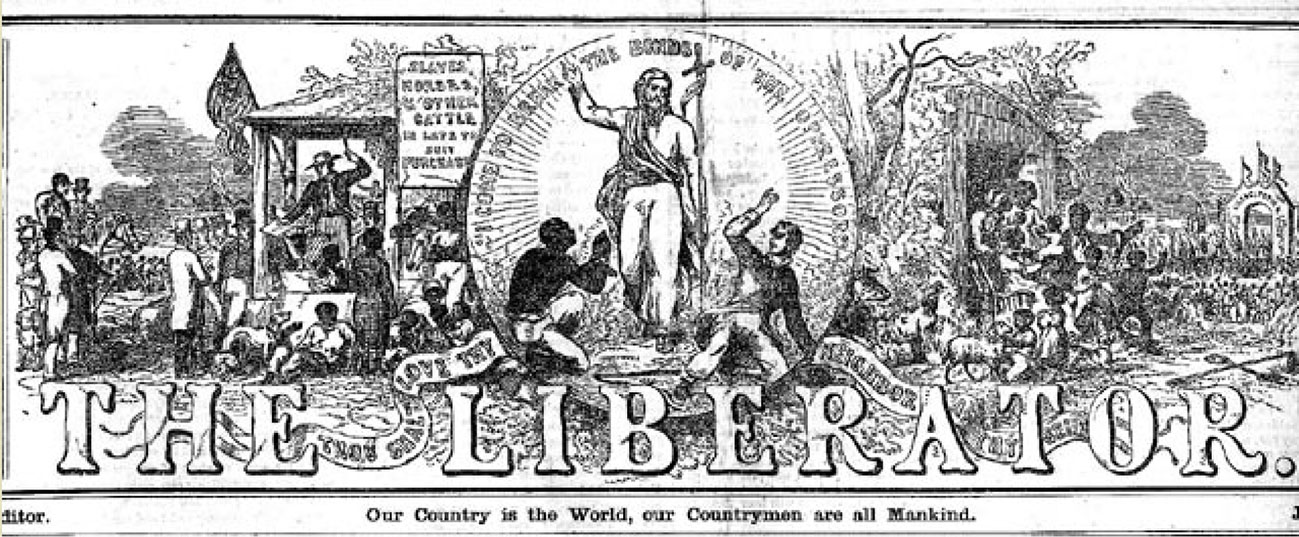
Figure 13.1 The masthead of The Liberator, by Hammatt Billings in 1850, highlights the religious aspect of antislavery crusades. The Liberator was an abolitionista believer in the complete elimination of slavery newspaper published by William Lloyd Garrison, one of the leaders of the abolitionist movement in the United States.
This masthead for the abolitionist newspaper The Liberator shows two Americas (Figure 13.1). On the left is the southern version where slaves are being sold; on the right, free blacks enjoy the blessing of liberty. Reflecting the role of evangelical Protestantism in reforms such as abolition, the image features Jesus as the central figure. The caption reads, “I come to break the bonds of the oppressor,” and below the masthead, “Our country is the World, our Countrymen are all Mankind.”
The reform efforts of the antebellum years, including abolitionism, aimed to perfect the national destiny and redeem the souls of individual Americans. A great deal of optimism, fueled by evangelical Protestantism revivalism, underwrote the moral crusades of the first half of the nineteenth century. Some reformers targeted what they perceived as the shallow, materialistic, and democratic market culture of the United States and advocated a stronger sense of individualism and self-reliance. Others dreamed of a more equal society and established their own idealistic communities. Still others, who viewed slavery as the most serious flaw in American life, labored to end the institution. Women’s rights, temperancea social movement encouraging moderation or self-restraint in the consumption of alcoholic beverages, health reforms, and a host of other efforts also came to the forefront during the heyday of reform in the 1830s and 1840s.