United States History · Chapter 19
19. The Growing Pains of Urbanization, 1870-1900
The late 19th century saw rapid urbanization in the U.S., driven by industrialization and waves of immigration, particularly from Southern and Eastern Europe and the Great Migration of African Americans from the South. Immigrants faced harsh living conditions in overcrowded tenements, while urban life was marked by challenges such as disease, pollution, and crime. Reform movements emerged, including the settlement house movement led by figures like Jane Addams, aimed at improving conditions for the urban poor. The era also saw the rise of machine politics, popular culture, and new forms of entertainment, which provided relief to the working class amidst the chaos of urban life. Additionally, the period was characterized by significant literary and social critiques that sought to address the inequalities and challenges of the time.
Learning Objectives
By the end of this chapter, you will be able to:
- Explain the growth of American cities in the late nineteenth century
- Identify the key challenges that Americans faced due to urbanization, as well as some of the possible solutions to those challenges
- Identify the factors that prompted African American and European immigration to American cities in the late nineteenth century
- Explain the discrimination and anti-immigration legislation that immigrants faced in the late nineteenth century
- Identify how each class of Americans—working class, middle class, and upper class—responded to the challenges associated with urban life
- Explain the process of machine politics and how it brought relief to working-class Americans
- Explain how American writers, both fiction and nonfiction, helped Americans to better understand the changes they faced in the late nineteenth and early twentieth centuries
- Identify some of the influential women and African American writers of the era
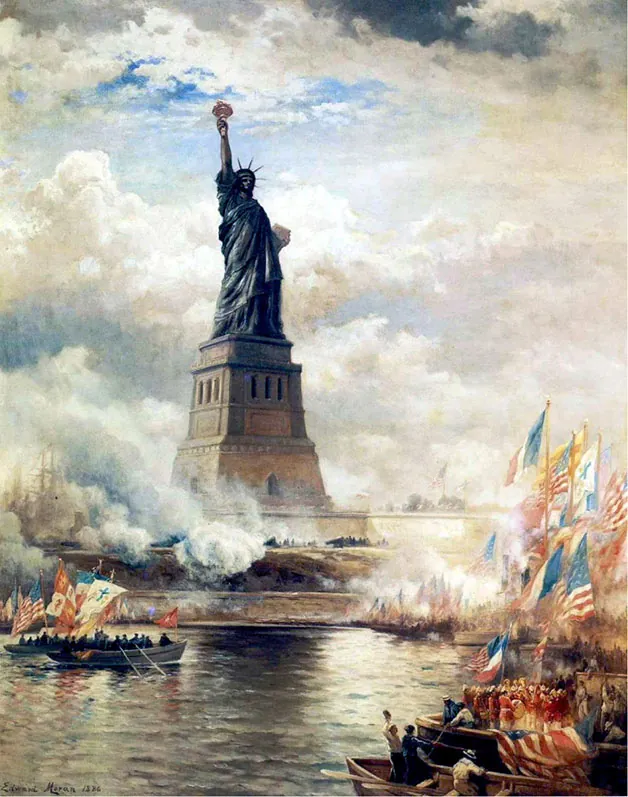
Figure 19.1 For the millions of immigrants arriving by ship in New York City’s harbor, the sight of the Statue of Liberty, as in Unveiling the Statue of Liberty (1886) by Edward Moran, stood as a physical representation of the new freedoms and economic opportunities they hoped to find.
“We saw the big woman with spikes on her head.” So begins Sadie Frowne’s first memory of arriving in the United States. Many Americans experienced in their new home what the thirteen-year-old Polish girl had seen in the silhouette of the Statue of Liberty (Figure 19.1): a wondrous world of new opportunities fraught with dangers. Sadie and her mother, for instance, had left Poland after her father’s death. Her mother died shortly thereafter, and Sadie had to find her own way in New York, working in factories and slowly assimilating to life in a vast multinational metropolis. Her story is similar to millions of others, as people came to the United States seeking a better future than the one they had at home.
The future they found, however, was often grim. While many believed in the land of opportunity, the reality of urban life in the United States was more chaotic and difficult than people expected. In addition to the challenges of language, class, race, and ethnicity, these new arrivals dealt with low wages, overcrowded buildings, poor sanitation, and widespread disease. The land of opportunity, it seemed, did not always deliver on its promises.