United States History · Chapter 18
18. Industrialization and the Rise of Big Business, 1870-1900
The late 19th century saw rapid industrialization and the rise of big business in America, characterized by significant inventions and the emergence of influential entrepreneurs like Andrew Carnegie and John D. Rockefeller. Technological advancements, such as the telephone and electric lighting, transformed communication and daily life, while the steel industry became a cornerstone of economic growth. Despite increased productivity and consumer access to goods, workers faced harsh conditions, leading to labor movements and strikes. However, public sentiment often turned against organized labor, culminating in violent events like the Haymarket affair and the Pullman Strike, which hindered union progress and solidified the challenges faced by the working class.
Learning Objectives
By the end of this chapter, you will be able to:
- Explain how the ideas and products of late nineteenth-century inventors contributed to the rise of big business
- Explain how the inventions of the late nineteenth century changed everyday American life
- Explain how the inventions of the late nineteenth century contributed directly to industrial growth in America
- Identify the contributions of Andrew Carnegie, John Rockefeller, and J. P. Morgan to the new industrial order emerging in the late nineteenth century
- Describe the visions, philosophies, and business methods of the leaders of the new industrial order
- Explain the qualities of industrial working-class life in the late nineteenth century
- Analyze both workers’ desire for labor unions and the reasons for unions’ inability to achieve their goals
- Describe the characteristics of the new consumer culture that emerged at the end of the nineteenth century
Introduction#
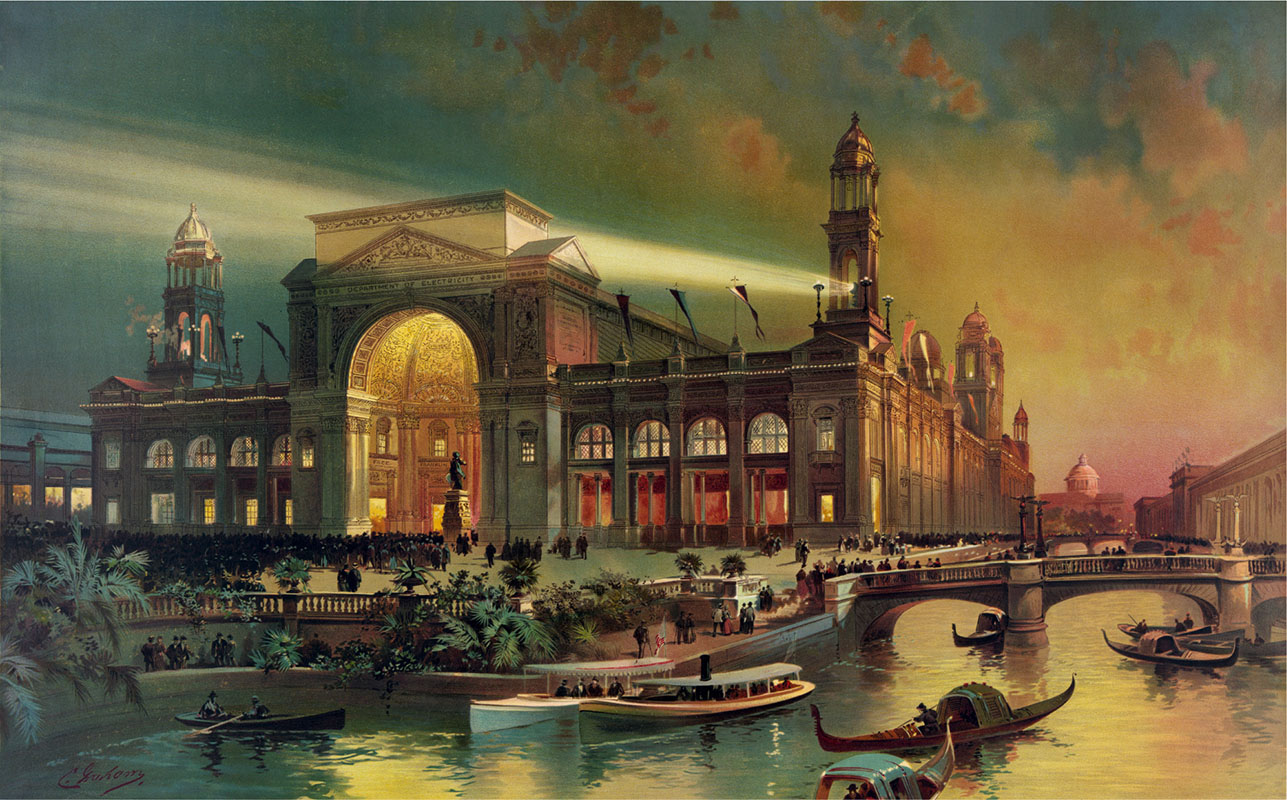
Figure 18.1 The Electrical Building, constructed in 1892 for the World’s Columbian Exposition, included displays from General Electric and Westinghouse, and introduced the American public to alternating current and neon lights. The Chicago World’s Fair, as the universal exposition was more commonly known, featured architecture, inventions, and design, serving as both a showcase for and an influence on the country’s optimism about the Industrial Age.
“The electric age was ushered into being in this last decade of the nineteenth century today when President Cleveland, by pressing a button, started the mighty machinery, rushing waters and revolving wheels in the World’s Columbian exhibition.” With this announcement about the official start of the Chicago World’s Fair in 1893 (Figure 18.1), the Salt Lake City Herald captured the excitement and optimism of the machine age. “In the previous expositions,” the editorial continued, “the possibilities of electricity had been limited to the mere starting of the engines in the machinery hall, but in this it made thousands of servants do its bidding . . . the magic of electricity did the duty of the hour.”
The fair, which commemorated the four hundredth anniversary of Columbus’s journey to America, was a potent symbol of the myriad inventions that changed American life and contributed to the significant economic growth of the era, as well as the new wave of industrialization that swept the country. While businessmen capitalized upon such technological innovations, the new industrial working class faced enormous challenges. Ironically, as the World’s Fair welcomed its first visitors, the nation was spiraling downward into the worst depression of the century. Subsequent frustrations among working-class Americans laid the groundwork for the country’s first significant labor movement.