United States History · Chapter 1
1. The Americas, Europe, and Africa Before 1492
Before 1492, globalization accelerated as Europeans sought new trade routes after the Crusades, leading to the discovery of the Americas. Major civilizations like the Olmec, Maya, Aztec, and Inca developed complex societies with unique cultures and agricultural practices. The arrival of Europeans initiated exploitation of native populations and the slave trade, particularly from West Africa, which became integral to the economy of the New World. The feudal system in Europe and the spread of Christianity also influenced exploration and colonization efforts.
Learning Objectives
By the end of this chapter, you will be able to:
- Locate on a map the major American civilizations before the arrival of the Spanish
- Discuss the cultural achievements of these civilizations
- Discuss the differences and similarities between lifestyles, religious practices, and customs among the native peoples
- Describe the European societies that engaged in conversion, conquest, and commerce
- Discuss the motives for and mechanisms of early European exploration
- Locate the major West African empires on a map
- Discuss the roles of Islam and Europe in the slave trade
Introduction#
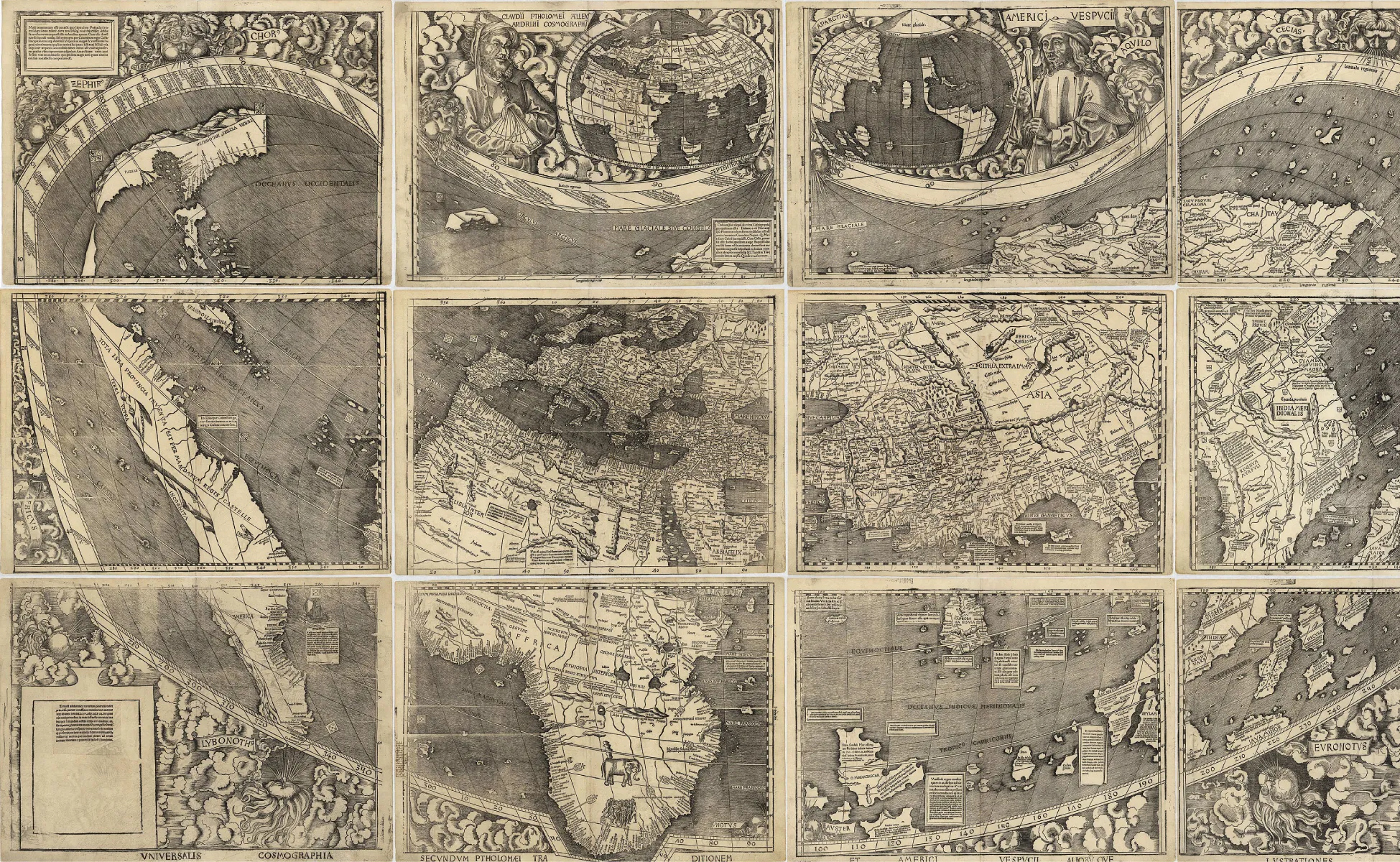
Figure 1.1 This 1507 map by cartographers Martin Waldseemüller and Matthais Ringmann is credited as the first to incorporate the word "America." Little was known about the continent at the time, as the land masses on the far left of the map reveal. But the New World offered opportunity that the Old World would exploit.
Globalization, the ever-increasing interconnectedness of the world, is not a new phenomenon, but it accelerated when western Europeans discovered the riches of the East. During the Crusadesa series of military expeditions made by Christian Europeans to recover the Holy Land from the Muslims in the eleventh, twelfth, and thirteenth centuries (1095–1291), Europeans developed an appetite for spices, silk, porcelain, sugar, and other luxury items from the East, for which they traded fur, timber, and Slavic people they captured and sold (hence the word slave). But when the Silk Road, the long overland trading route from China to the Mediterranean, became costlier and more dangerous to travel, Europeans searched for a more efficient and inexpensive trade route over water, initiating the development of what we now call the Atlantic World.
In pursuit of commerce in Asia, fifteenth-century traders unexpectedly encountered a “New World” populated by millions and home to sophisticated and numerous peoples. Mistakenly believing they had reached the East Indies, these early explorers called its inhabitants Indians. West Africa, a diverse and culturally rich area, soon entered the stage as other nations exploited its slave trade and brought its peoples to the New World in chains. Although Europeans would come to dominate the New World, they could not have done so without Africans and native peoples (Figure 1.1).