United States History · Chapter 4
4. Rule Britannia! The English Empire, 1660–1763
The eighteenth century marked the rise of Great Britain as a commercial and military power, with significant expansion of its empire, including the establishment of Restoration colonies like New York, New Jersey, and Pennsylvania. The era also saw the Glorious Revolution, which limited monarchical power and established constitutional monarchy, alongside the emergence of slavery as a cornerstone of the economy. Cultural movements such as the Great Awakening and the Enlightenment influenced colonial society, fostering a sense of shared identity among British subjects, while wars for empire, particularly the French and Indian War, solidified Britain's dominance in North America but also sowed seeds of future conflict due to rising debts and tensions with the colonies.
Learning Objectives
By the end of this chapter, you will be able to:
- Analyze the causes and consequences of the Restoration
- Identify the Restoration colonies and their role in the expansion of the Empire
- Identify the causes of the Glorious Revolution
- Explain the outcomes of the Glorious Revolution
- Analyze the role slavery played in the history and economy of the British Empire
- Explain the effects of the 1739 Stono Rebellion and the 1741 New York Conspiracy Trials
- Describe the consumer revolution and its effect on the life of the colonial gentry and other settlers
- Explain the significance of the Great Awakening
- Describe the genesis, central ideas, and effects of the Enlightenment in British North America
- Describe the wars for empire
- Analyze the significance of these conflicts
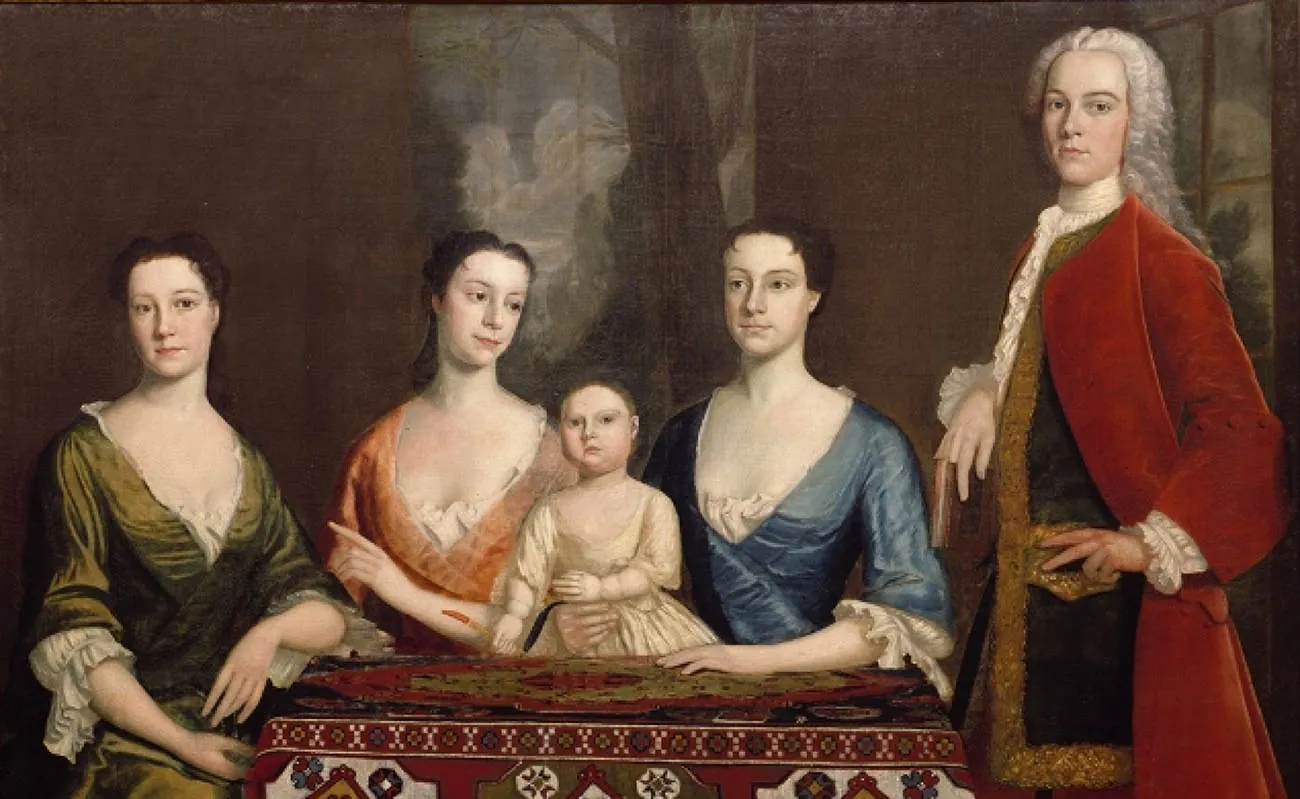
Figure 4.1 Isaac Royall and his family, seen here in a 1741 portrait by Robert Feke, moved to Medford, Massachusetts, from the West Indian island of Antigua, bringing their slaves with them. They were an affluent British colonial family, proud of their success and the success of the British Empire.
The eighteenth century witnessed the birth of Great Britain (after the union of England and Scotland in 1707) and the expansion of the British Empire. By the mid-1700s, Great Britain had developed into a commercial and military powerhouse; its economic sway ranged from India, where the British East India Company had gained control over both trade and territory, to the West African coast, where British slave traders predominated, and to the British West Indies, whose lucrative sugar plantations, especially in Barbados and Jamaica, provided windfall profits for British planters. Meanwhile, the population rose dramatically in Britain’s North American colonies. In the early 1700s the population in the colonies had reached 250,000. By 1750, however, over a million British migrants and African slaves had established a near-continuous zone of settlement on the Atlantic coast from Maine to Georgia.
During this period, the ties between Great Britain and the American colonies only grew stronger. Anglo-American colonists considered themselves part of the British Empire in all ways: politically, militarily, religiously (as Protestants), intellectually, and racially. The portrait of the Royall family (Figure 4.1) exemplifies the colonial American gentry of the eighteenth century. Successful and well-to-do, they display fashions, hairstyles, and furnishings that all speak to their identity as proud and loyal British subjects.